Using Grok Bot for real coding and DevOps work

Using Grok Bot for real coding and DevOps work
I do not need another chatbot that writes a cheerful essay and then shrugs when the pipeline is red.
What I want is a second pair of hands that can dig through a repo, draft a fix, check a deploy path, and still stop before anything irreversible. Clear job. Clear boundary. Confirm before the scary bits.
That is how I use Grok Bot for coding and DevOps. Not as a magic button. As a junior-senior hybrid that works fast when the brief is tight, and goes sideways when I am vague. The rest of this post is the working method I keep coming back to when the novelty wears off and the tickets are still waiting.
The thesis in one breath
Give it a job you could hand to a sharp contractor for an afternoon.
Tell it what not to do. Especially merge, deploy, publish, IAM, secrets, and outgoing email.
Make it show the plan and the diff before anything leaves the building.
If that sounds boring, good. Boring is how production stays up. Excitement belongs in the product, not in how you ship the hotfix.
What “good” looks like on a typical afternoon
Good is not a wall of generated code with a smile at the end. Good is a small, reviewable change that matches the stack you already have, plus enough explanation that I can trust it without re-deriving the whole problem.
On a coding pass, that might look like this. A failing test in a Rails controller. I paste the failure, name the file, and say: fix the nil on the empty association, keep the existing pattern in the sibling controller, do not rename anything, show me the diff when you are done. Ten minutes later I am reading a short patch, not a rewrite of the domain model. I still run the test myself. The agent drafts; I own the green bar.
On a DevOps pass, it is the same shape with different tools. A pipeline fails on a missing environment variable in the staging job. I ask it to open the YAML, find where prod already sets the value, mirror that for staging, and stop before pushing. Then I want a one-paragraph explanation of why it failed, not a tutorial on CI theory. The win is time-to-understanding, not a bigger blast radius.
Sometimes “good” is research, not edits. “Compare these two Bicep params and tell me which one actually gates geo-redundant backups.” Or: “Walk the last failed run log and give me the first real error, not the cascade.” Those jobs save me the scroll-and-squint tax that dyslexia makes expensive. A crisp pointer beats an archaeology dig I do not have the focus for after lunch.
The point is narrative, not vibes. A good session has a start, a constraint, a deliverable, and a clear place where I take the wheel again. If I cannot say what “done” looks like in one sentence, I am not ready to ask yet.
Vague ask vs specific ask
This is where most agent sessions die, quietly.
Vague sounds friendly. It is not. It is an invitation to invent scope. Models are very good at filling silence with ambition.
A vague ask looks like this in chat:
“Can you tidy up the deploy stuff? It feels messy.”
A specific ask looks like this:
“In
.github/workflows/deploy.yml, the staging job is missingDATABASE_URL. Prod already sets it from thestaging-secretsenv. Add the same mapping for staging only. Do not touch prod. Do not push. Show the diff and a two-line summary.”
The first one fails because “tidy” is not a done state. The bot will refactor folder names, invent a new workflow, or “improve” YAML you never asked it to improve. You then spend longer undoing taste than you would have spent writing the one line yourself. Worse, the tidy-up often looks plausible until you notice it changed a prod path “for consistency.”
The second one works because it names the file, the symptom, the precedent, the boundary, and the exit condition. You can review it in one screen. That is the whole game. Specificity is not pedantry. It is how you keep the agent inside the fence.
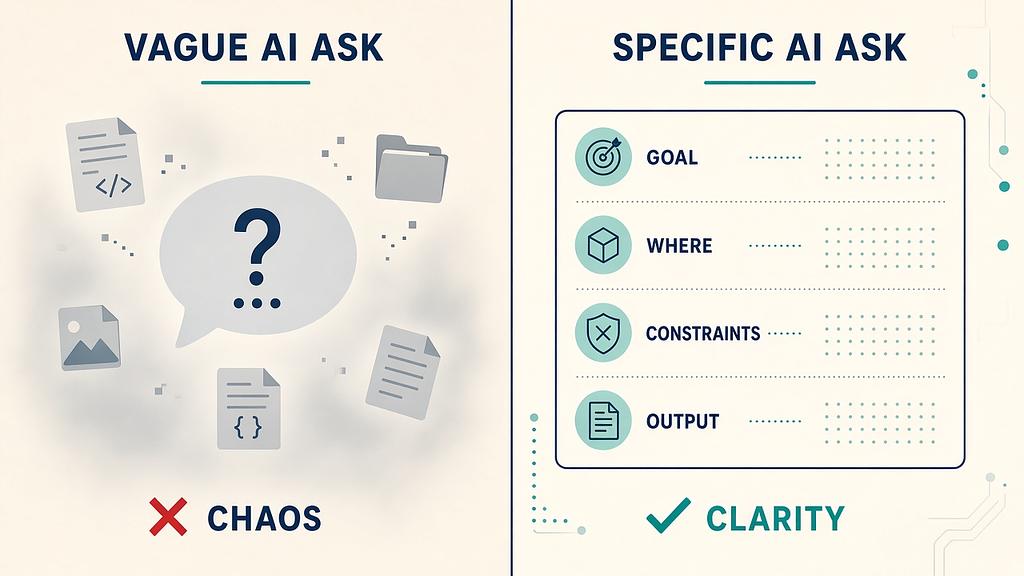
I still catch myself typing the vague version when I am tired. When I do, I stop and rewrite it as a contractor brief before I hit send. Thirty extra seconds. Hours of rework avoided. If I cannot name the file or the success check, I do a five-minute look myself and then ask properly.
Agentic and long-running work
Grok Bot is useful for longer jobs — migrations, log archaeology, multi-file refactors — but long-running does not mean unbounded. Autonomy without a brief is just a longer way to get lost.
I treat big work like a change window.
First: a tight brief. Goal, repo path, success check, hard stops. “Do not merge. Do not deploy. Do not rotate keys. Ask before any az write.” I write those stops even when I think they are obvious, because long chats forget the opening message.
Second: plan before a big change. I want a short plan in plain English, then I say go. If the plan already smells like a rewrite, we shrink it. Diff-sized work beats heroic rewrites every time. A plan that lists twelve files is usually four jobs pretending to be one.
Third: keep the work in reviewable chunks. One PR-shaped unit. One failing test suite. One workflow file. If the agent wants to “also clean up naming while we are here,” that is a separate job for another day. Parallel ambition is how you get an unreviewable monster at 11pm.
When a pipeline fails at 4pm and the log is a novel, I will let it dig for twenty minutes — but only after I have told it what “done” looks like. “Find the first non-cascade error. Quote the line. Propose one fix. Stop.” That is agentic without being a runaway. Digging is fine. Quietly applying the dig is not.
If the task needs credentials, production access, or a merge to main, the brief says so up front and the confirm-before rule still applies. Speed is not a reason to skip the gate. The longer the run, the more important the pause at the end.
Confirm-before, or the tired-evening failure mode
Confirm-before is not paranoia. It is how you stay friends with future-you.
I treat these as always-ask, never-assume: merge to main, deploy to any shared environment, publish a blog post or a package, create or widen IAM roles, touch secrets or key vaults, send email as me, delete or overwrite anything that is not scratch. Local scratch files can move fast. Shared systems wait for a yes.
Here is the failure mode I am protecting against. It is a typical evening, not a war story. You have been in meetings all day. The agent has been helpful for hours. The diff looks roughly right if you do not stare. You skim. You say “yeah go on.” It merges, deploys, and kindly notifies a customer alias you forgot was still wired into the staging notify list. Nobody dies. You still spend the next morning apologising and writing a post-mortem for a mistake that was really a missing pause.
So I ask for prepare-then-approve. Draft the PR, do not merge. Render the deploy command, do not run it. Write the email draft, do not send. Show the IAM change as a plan, not an apply. When I am sharp, I approve in one line. When I am not, the pause saves the day. The agent can still do ninety percent of the work. The last ten percent is where judgment lives.
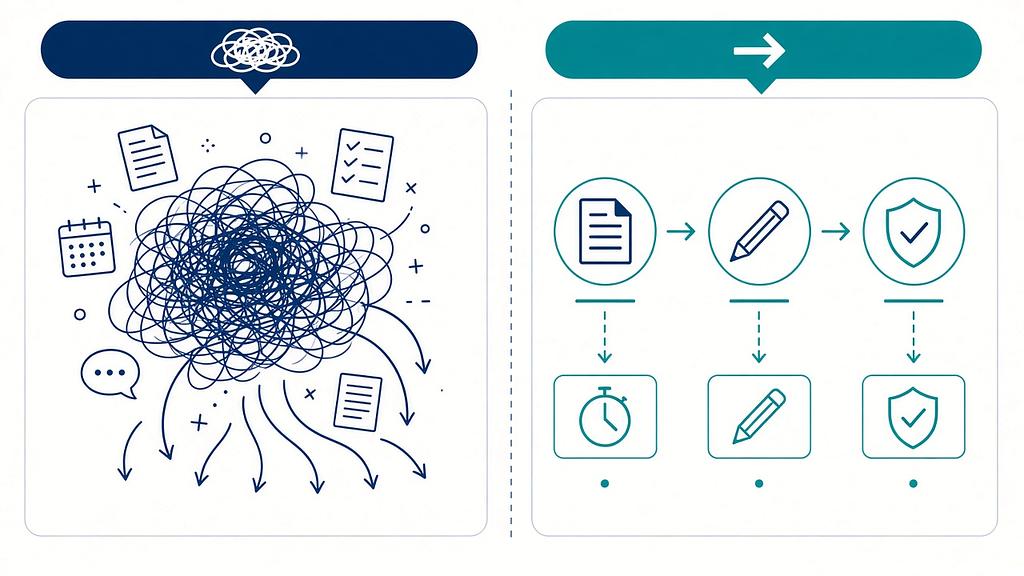
If a tool offers an auto-approve mode for “trusted” actions, I keep it off for the list above. Convenience is how tired evenings become incidents. Trust is earned per action type, not granted because yesterday went well.
Dyslexia-friendly output as a standing preference
I am dyslexic, and long walls of text are expensive. A brilliant answer I cannot scan is still a failed handoff.
So I keep a standing preference in the chat: short paragraphs, verdict first, scannable headings, concrete next step at the end. Prefer a tight summary with an optional detail section over a single dense slab. Use plain UK English. Call out the decision in a one-line “Verdict:” so I can see it without hunting. Tables beat paragraphs for comparisons. Quotes from logs beat paraphrases.
That does not mean I want bullet-only cheat sheets. I still want real prose when the topic needs it — trade-offs, why the failure happened, what we are not doing. The difference is structure. Lead with the answer. Then explain. Then offer the patch. If I need the deep cut, I will ask for it after I have the verdict.
When the agent forgets and dumps a novel, I nudge once: “Same content, dyslexia-friendly layout.” It usually lands. Consistency beats cleverness. I would rather restate the preference than pretend I read what I did not.
How this fits Funcoder publishing
I draft posts in chat the same way I draft code changes: iterate until the voice is mine, then freeze a markdown file with YAML frontmatter. The chat is the workshop. The file is the artefact.
Title, summary, tags, SEO fields, slug. Status stays draft until I am happy. Images go in as placeholders first; paths get filled when we are ready to publish. That keeps the writing moving without blocking on asset plumbing.
Publishing is deliberate. The site has an API path and a bin/publish_post style step. That only runs after I say OK. Same confirm-before rule as a deploy. A blog post is not production traffic, but it is still public, searchable, and hard to un-say. I am happy for the agent to prepare everything. I am not happy for it to hit publish while I am making tea.
So the loop is: write in chat → harden the markdown → I read it on a clear head → then, and only then, publish. Light process. No drama. Building in public does not mean shipping on autopilot.
Common failure modes and how to recover
Things go wrong. That is fine. What matters is noticing early and resetting cleanly.
Scope creep is the classic. The agent “while we are here” refactors three modules you did not name. Recover by reverting to the last good commit and restating the brief with a hard stop: only files X and Y. Do not negotiate with the extra work. Delete it and ask again smaller.
Confident wrong is sneakier. It invents an API that does not exist, or cites a flag from a different cloud with total calm. Recover by asking it to quote the file or docs it used. No quote, no trust. If it cannot point at a line, treat the claim as a rumour.
Silent side effects happen when a tool chain is too eager. It pushed, tagged, or opened a PR you did not ask for. Recover by checking git status and the remote immediately, then tightening the standing rule in the next message. Assume nothing until you have looked.
Context rot shows up in long threads. The chat forgets the boundary from message one and starts “helping” past the fence. Recover by starting a fresh thread with a short paste of the constraints. New thread, same brief, often cheaper than arguing with history.
Pretty but unreadable is my personal tax. Lovely essay, no verdict, no next step. Recover with a blunt redirect: verdict first, then detail, keep it in short paragraphs. Same facts, different layout.
Over-permissioned tools deserve a hard no. Broad cloud rights “to be helpful” are how a small task becomes a large incident. Recover with least privilege and a written plan before any write. If the plan needs Owner, the plan is wrong.
None of these are reasons to stop using agents. They are reasons to keep the human in the loop where the blast radius is real. Recover fast, shrink the brief, continue.
Closing
I am not trying to replace judgment with a model.
I am trying to spend my judgment on the parts that matter — the boundary, the review, the yes or no — and let the bot do the digging, the drafting, and the first pass at the boring glue. That division of labour is the whole point.
Clear job. Clear boundary. Confirm before merge, deploy, publish, secrets, IAM, and email. Ask for output I can actually read when my brain is fried.
That is the whole method. It is not glamorous. It ships.
If you try the same shape with your own tools, start smaller than you think. One specific ask. One diff. One deliberate approve. Then scale the trust with evidence, not vibes. The agent gets faster. Your standards should not get looser.